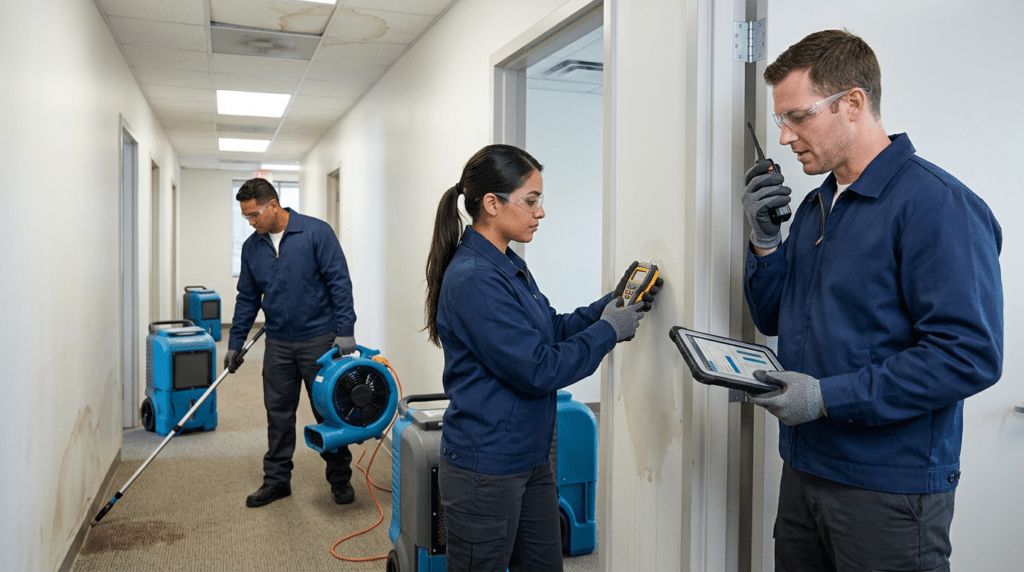
When water unexpectedly floods your commercial property, your first restoration call can help reduce long-term damage. Choose a commercial water damage restoration partner that can explain its response plan, verify qualifications, document moisture, and protect business operations.
For Utah businesses, we offer around-the-clock response, insurance documentation, and English and Spanish support. Use this guide to compare providers without delaying urgent work. Call The Flood Company at (801) 294-7452 to discuss your property’s immediate needs.
What You’ll Need Before Choosing a Restoration Partner
Gather basic property details, but do not delay emergency help to finish paperwork. Choosing a contractor is a management task; entering flooded rooms or investigating electrical hazards is not. Keep people outside unsafe areas and let qualified professionals assess access.
Understanding Your Commercial Water Damage Situation
Commercial water damage can involve pipe leaks, water heater failures, roof leaks, sprinkler discharges, or sewage backups. The source affects cleanup methods and occupant protection. Tell the provider whether water is still entering, which floors are affected, and whether employees or tenants remain inside.
Restoration means more than removing visible water. It includes evaluating affected materials, drying suitable assemblies, addressing contamination, and planning necessary repairs.
Key Information to Gather for Restoration Companies
Prepare a short incident record that the contractor, insurer, and property manager can share. Include access instructions and approval contacts so responders know who can authorize work.
- Property address, building use, and affected rooms or units.
- Suspected source and when someone first noticed the water.
- Photos taken from safe locations.
- Utility concerns, restricted areas, and sensitive contents.
- Insurance contact, lease responsibilities, and purchasing authority.
Planning effort: Begin screening during the emergency call, then complete the document review before expanding the work. Ask for separate pricing for assessment, mitigation, and repairs. We offer free consultations and initial inspections for water damage; request one when discussing site access.
Step 1: Assess the Urgency and Need for 24/7 Emergency Response
Active leaks and standing water need prompt professional attention once access is safe. A staffed phone line alone doesn’t establish response capability. Ask whether a crew is available, what it can bring, and when someone will provide an arrival estimate.
The Critical Role of Emergency Water Extraction
Emergency extraction removes accessible standing water before detailed drying begins. It can help limit further spread, but it doesn’t confirm that floors, walls, or ceiling cavities are dry. The contractor should explain what follows extraction before asking you to approve the full scope.
Do not ask employees to handle sewage or move through water near electrical equipment. Request qualified help for utility isolation and source repair.
We provide 24/7 emergency service. Call (801) 294-7452 with the source, affected areas, and access restrictions so we can discuss the immediate response rather than an assumed arrival time.
Step 2: Verify Credentials and Industry Certifications
A confident sales pitch is not proof of qualifications. Request current certificates, applicable licenses, liability insurance, and workers’ compensation documentation. Confirm that the people supervising your project hold training relevant to the work.
Importance of IICRC Certification for Commercial Restoration
IICRC credentials identify training in specific restoration disciplines, not permission to perform every trade. Ask which credentials the assigned technicians hold. The IICRC S500 Standard addresses professional water damage restoration; ask how the contractor applies its principles to assessment, drying, and documentation.
Don’t infer company certification from a logo or one employee’s qualification. Ask for verifiable credential details and the name of your project supervisor.
Compliance with OSHA and EPA Regulations
Worker protection and environmental requirements need a site-specific plan. Ask how the contractor addresses electrical hazards, protective equipment, containment, and suspect asbestos or lead-containing materials before demolition. OSHA workplace requirements and applicable EPA rules aren’t interchangeable with restoration certifications.
For older buildings, ask who determines whether testing or specialist removal is required. Request that safety responsibilities appear in the written scope before destructive work begins.
Step 3: Evaluate the Scope of Services Offered
An extraction-only proposal can leave you coordinating drying and repairs yourself. Request a written scope that identifies each phase, responsible party, and exclusion. A single contact is useful only if that person can explain who performs the work.
Thorough Damage Assessment Capabilities
A useful assessment follows the water beyond the visible puddle. It should address adjoining rooms, lower floors, wall cavities, and affected materials. Ask for a moisture map, a record showing where readings were taken and what those readings mean.
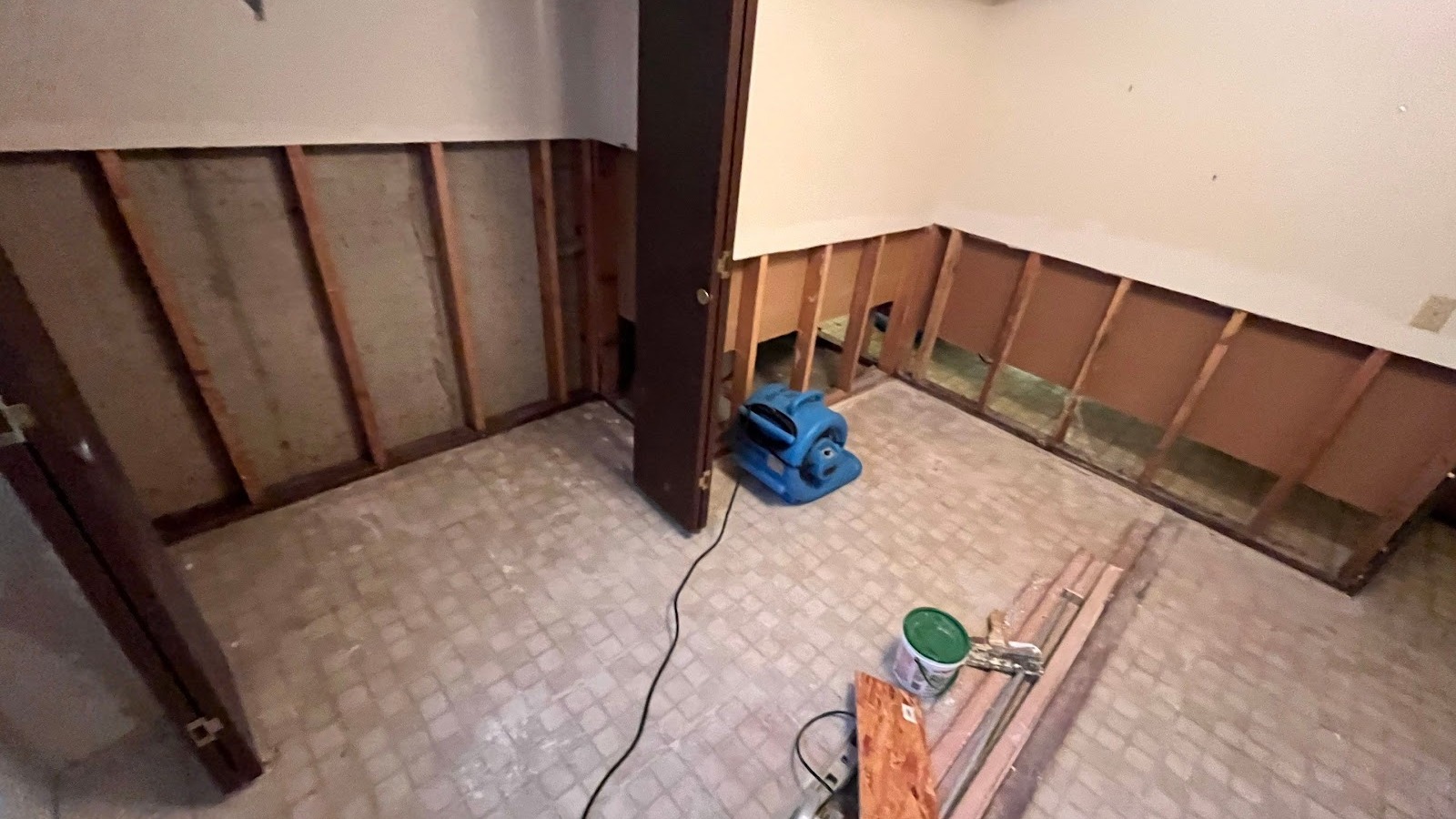
Our supplied Layton project record describes a water heater leak affecting a hallway, furnace-room concrete, and studs. That example shows why the inspection boundary should follow water movement, not room boundaries.
Beyond Water Extraction: Drying, Dehumidification, and Repair
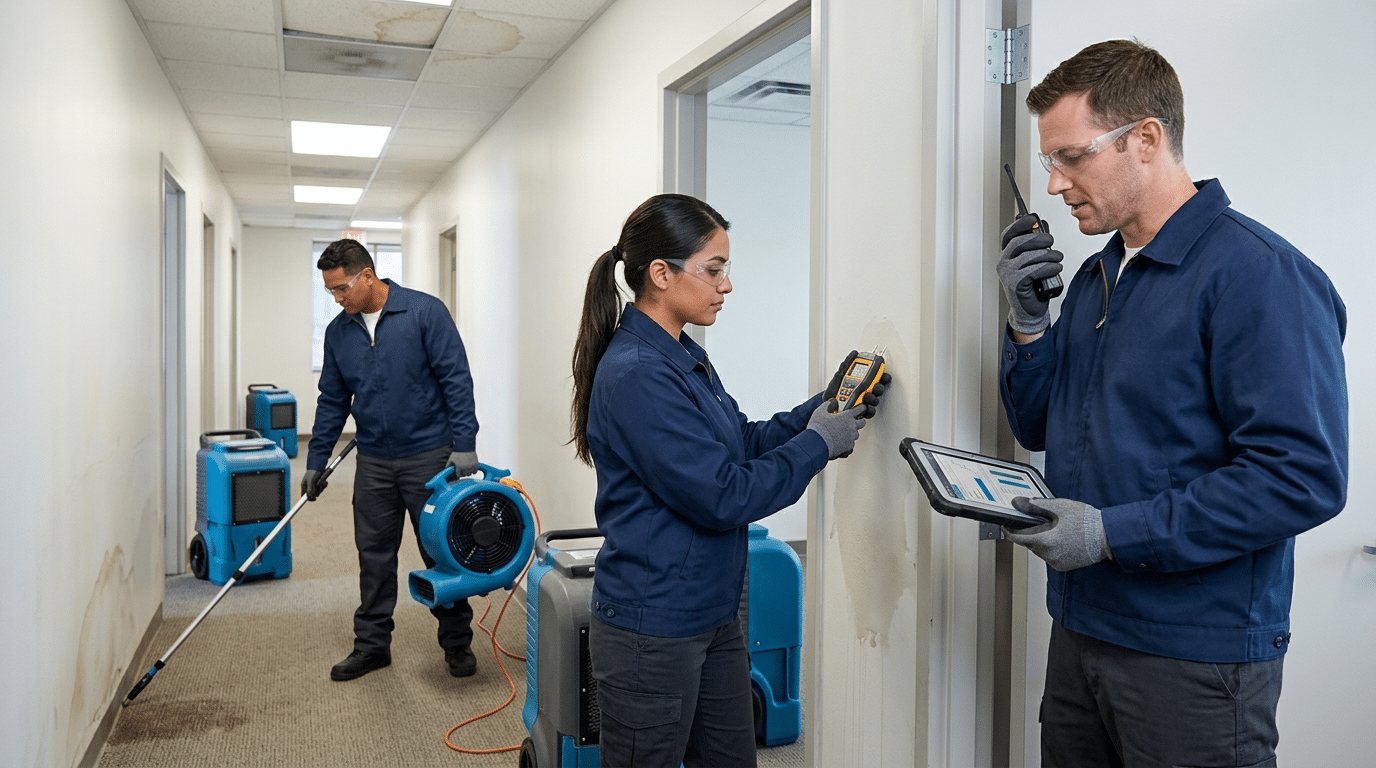
Drying needs measurable goals, not just equipment placement. Air movers support evaporation, while dehumidifiers remove moisture from the air. Ask how the team will monitor materials and decide when equipment can come out.
Separate emergency stabilization from reconstruction approvals. Our steps of the water damage restoration process explain how these phases connect.
Addressing Potential Mold Damage Restoration and Commercial Mold Remediation
A mold plan should cover inspection, testing when appropriate, remediation, and prevention. Inspection identifies visible growth and moisture sources. Testing should answer a defined question, not serve as an automatic add-on to every wet building.
Ask how the team will contain affected areas, remove unsuitable materials, clean remaining surfaces, and verify completion. Prevention requires correcting the moisture source and checking drying progress. Review our water damage mold prevention guide before discussing follow-up checks.
Request a scope review that separates Water Damage Evaluation and Assessment from any necessary Commercial Mold Remediation.
Step 4: Inquire About Experience with Commercial Properties
A business can’t be treated like an empty room with wet carpet. Ask for examples involving occupied buildings, shared systems, restricted access, and staged work. Relevant experience includes coordinating people and approvals, not just operating drying equipment.
Experience with Apartment Building Water Damage Restoration
Apartment losses require unit-by-unit documentation and clear access arrangements. Water can travel between floors, affecting residents who never saw the original leak. Ask who coordinates tenant notices, keys, common-area protection, and separate records for each affected unit.
Property managers also need clear boundaries between building repairs and residents’ belongings. Put those responsibilities in writing before contents are moved.
Handling Large-Scale Construction Water Damage Cleanup
Construction-site cleanup must account for unfinished assemblies, temporary power, and trade schedules. Ask how moisture findings will affect insulation, flooring, and drywall installation. Covering wet materials to protect a deadline is not an acceptable completion plan.
Schools need protected student routes and controlled work zones. Healthcare facilities need coordination with infection-control staff and safeguards for sensitive spaces. Ask for a property-specific continuity plan rather than assuming the whole building can remain open.
Navigating Commercial Property Insurance Claims
Claim support should document the loss without promising what the insurer will pay. Preserve incident photos, damaged-item records, invoices, and business interruption records as appropriate. Have your broker or adjuster clarify policy questions and reporting requirements.
Coverage, limits, and eligibility are determined by the issued policy and applicable state rules. Ask us how Insurance Claim Assistance can support your documentation, then confirm who authorizes each phase of work.
Step 5: Evaluate Response Times, Communication, and Insurance Support
Unclear updates make an already disruptive loss harder to manage. Select a contractor that names a project lead, defines reporting frequency, and explains how scope changes receive approval. Your tenants and leadership team need decisions they can act on.
Ask About Commercial Emergency Response Times
Ask for current dispatch availability, not a blanket promise based on a past job. Winter road conditions along the Wasatch Front and access through Summit County can affect travel. Provide loading access, parking restrictions, security contacts, and after-hours entry instructions.
Customer feedback supplied to us highlights responsive emergency help. That theme is useful, but it doesn’t establish an arrival commitment for your property.
Look for Clear Communication Throughout the Restoration Process
Request updates that explain completed work, current readings, access limits, and the next decision. A photograph of equipment isn’t a progress report. Ask who will notify you if drying stalls or concealed damage changes the scope.
Other supplied customer feedback emphasizes clear explanations and help understanding next steps. We also provide English and Spanish support; tell us your team’s communication needs during intake.
Ask About Insurance Documentation and Direct Billing
Direct billing changes payment administration, not your policy terms or contractual obligations. We work directly with insurers on documentation, estimates, and billing. Ask what happens if the insurer disputes a charge or approves only part of the work.
We offer free initial water damage inspections and qualifying zero-down options when insurance approval requirements are met. Confirm eligibility, deductibles and payment responsibilities in writing. For budgeting context, review water damage restoration cost factors in Utah.
Request an itemized estimate and written approval process before authorizing work beyond emergency stabilization.
Step 6: Review Their Technology and Equipment
Equipment matters only when the contractor explains why your building needs it. Ask how material types, affected volume, contamination, and available power shape the drying plan. A longer equipment list isn’t proof of a better approach.
Advanced Drying and Monitoring Equipment
Moisture meters measure material moisture, while humidity instruments track air conditions. Thermal imaging can flag temperature patterns that warrant investigation, but it doesn’t prove moisture by itself. Ask how suspected wet areas receive confirmation.
A HEPA air scrubber filters airborne particles; it does not replace source removal or structural drying. Ask where filtration is necessary and how work zones will be separated from occupied areas.
Pro Tip: Request a sample drying log with identifying customer information removed. Look for dated readings, measurement locations, drying targets, and explanations for equipment changes.
Ask the contractor to explain its proposed monitoring schedule before comparing equipment charges.
Step 7: Consider Reputation and Client Testimonials
Look for consistent themes about communication, careful assessment, and follow-through rather than a single dramatic response story. Residential feedback can reveal service habits, but it doesn’t prove capacity for a large occupied commercial loss.
Our Millcreek project record documents work authorization, a health questionnaire, and extraction. Those process details give buyers concrete questions to ask about intake and safety.
Use this final selection checklist before approving the broader scope:
- Confirm dispatch availability and immediate safety responsibilities.
- Verify credentials, insurance, and the assigned supervisor.
- Get a written assessment and phased scope.
- Review experience with comparable property uses.
- Agree on updates, approvals, and billing responsibilities.
- Request moisture targets and completion documentation.
- Check references relevant to occupied commercial buildings.
Ask us to explain how our proposed process addresses each item. Results can vary based on the extent and type of damage, speed of initial response, and specific property conditions.
Frequently Asked Questions About Commercial Water Damage Restoration
The Bottom Line: Making an Informed Choice for Your Business
- Confirm real dispatch capacity before comparing sales promises.
- Require a written scope, measurable drying goals, and clear approval limits.
- Choose experience that matches your building’s occupants and operations.
- Separate insurance documentation from decisions about coverage.
The next conversation should turn these selection criteria into a plan for your property.
Ready to Partner with The Flood Company for Your Commercial Water Damage Needs?
Start with the water source, affected rooms, and operations you need to protect. Our Commercial Water Restoration Services for Businesses provide the next point of discussion for assessment and coordination.
Proudly serving homes and businesses across Utah and South West Wyoming, with rapid response teams in key counties including Davis, water damage inspection or discuss emergency response. Ask about phased work, insurance documentation, and qualifying zero-down options before you authorize the scope.