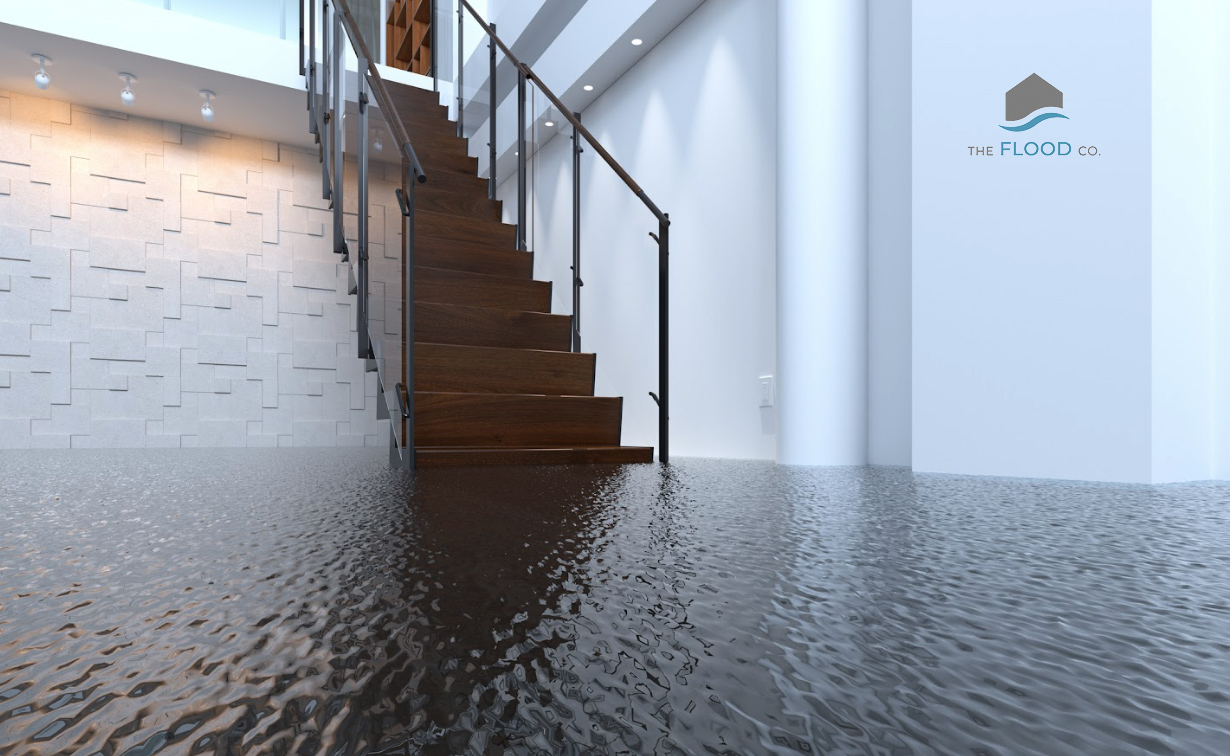
When water floods your basement, a pipe bursts in the middle of the night, or fire damages your property, every minute matters. Choosing the right 24/7 emergency restoration service can help limit further damage, reduce restoration costs, and get your home or business back to normal sooner.
The best emergency restoration company should offer around-the-clock availability, qualified technicians, professional equipment, transparent communication, and assistance with insurance documentation.
For example, when Camille experienced a flooded basement at 8:30 PM, she contacted The Flood Company. According to her customer review, the restoration team arrived within an hour and immediately began working.
This guide explains how to choose the right 24/7 emergency restoration service, what questions to ask before hiring a company, which mistakes to avoid, and when professional restoration is necessary.
What to Know Before Hiring an Emergency Restoration Company
Choosing an emergency restoration company involves more than finding someone who can remove water or clean up visible damage. You need a team capable of identifying hidden problems, protecting affected areas, and completing the restoration process safely.
Before selecting a company, consider the following factors:
- 24/7 emergency availability: Confirm that the company accepts emergency calls during nights, weekends, and holidays.
- Rapid response: Ask how quickly technicians can reach your property.
- Professional certifications: Look for technicians with relevant Institute of Inspection, Cleaning and Restoration Certification (IICRC) credentials.
- Comprehensive restoration services: Choose a provider experienced in water, fire, smoke, and mold damage.
- Local experience: Review the company’s history and customer feedback in your area.
- Insurance assistance: Ask whether the company helps document damage and offers direct insurance billing.
- Clear estimates and communication: Understand the proposed work, payment responsibilities, and expected restoration timeline.
Evaluating these factors helps you select a restoration partner that can respond effectively while keeping you informed throughout the recovery process.
Why Fast Emergency Restoration Response Matters
Property damage can worsen quickly when water, smoke, or moisture remains untreated. Prompt action helps prevent additional deterioration and may reduce the amount of repair work required.
Preventing Secondary Water Damage
Water can spread beneath flooring, soak into drywall, and reach insulation or structural materials. Even after standing water disappears, moisture may remain trapped inside building materials.
Without proper extraction and drying, this hidden moisture can contribute to:
- Warped flooring and damaged subfloors
- Weakened drywall and deteriorating insulation
- Persistent damp odors
- Mold growth
- Additional structural repairs
The Environmental Protection Agency (EPA) recommends drying water-damaged areas and materials within 24 to 48 hours to help prevent mold growth.
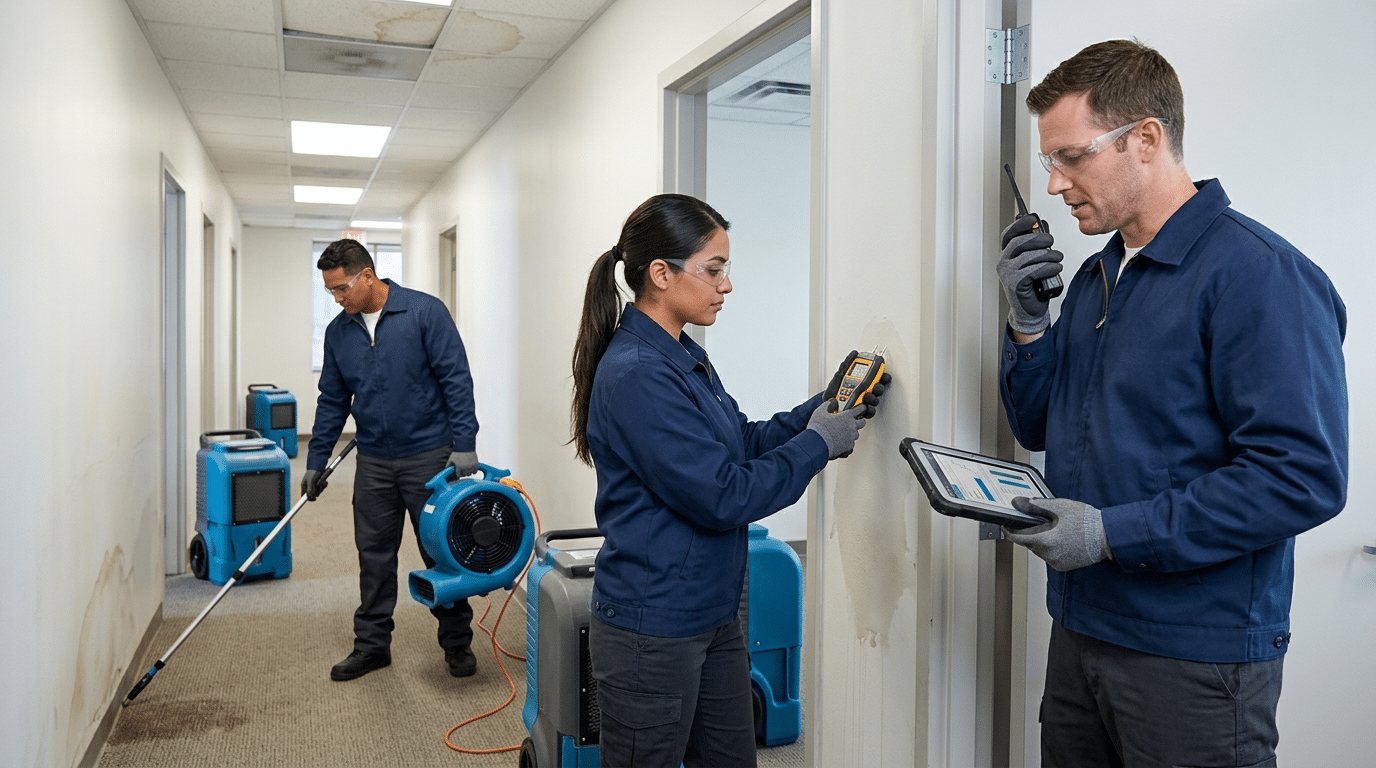
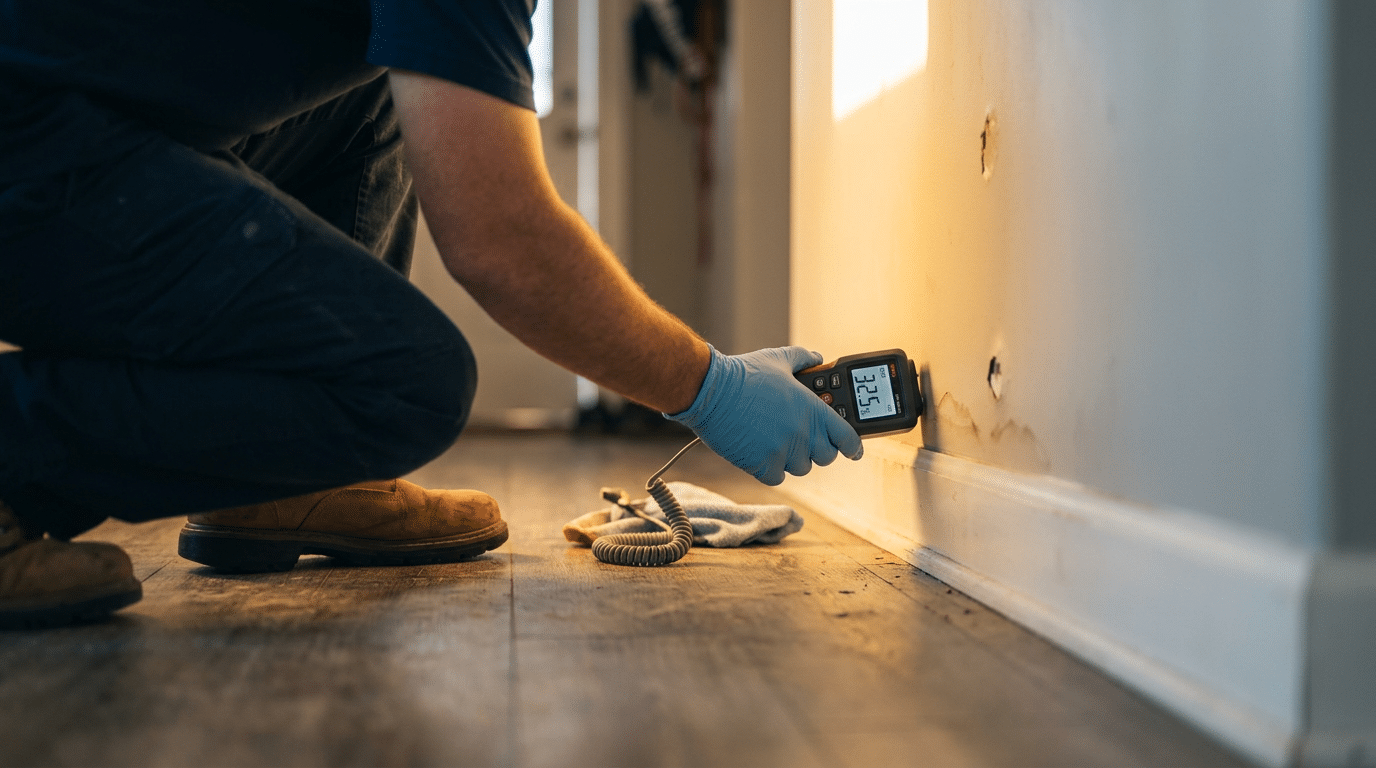
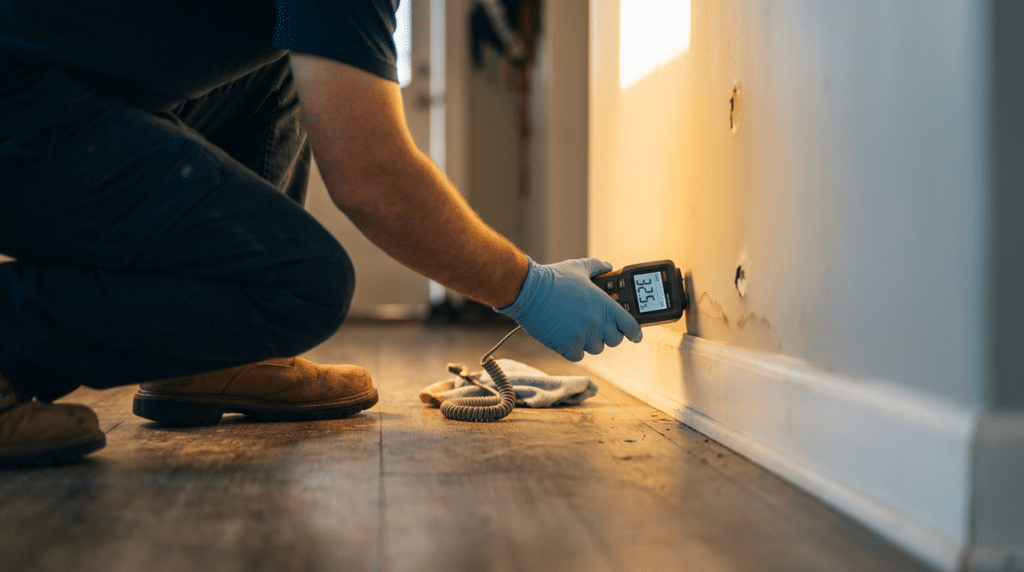
Professional emergency water damage restoration teams use moisture detection equipment, extraction tools, air movers, and dehumidifiers to identify and address moisture that ordinary household equipment may miss.
Reducing Fire and Smoke Damage
Fire damage does not end when the flames are extinguished. Smoke residue, soot, and firefighting water can continue affecting walls, ceilings, furnishings, and other building materials.
A qualified fire damage restoration company can assess affected areas, remove debris, clean smoke residue, address odors, and develop a restoration plan.
Protecting Your Property and Safety
Floodwater, sewage backups, fire-damaged structures, and electrical hazards can create unsafe conditions.
Professional restoration teams assess these risks before beginning cleanup. Their training and equipment help them determine appropriate procedures for different types of damage.
The sooner you contact a qualified restoration company, the sooner it can assess the damage and begin appropriate mitigation work.
How to Choose the Right 24/7 Emergency Restoration Service
Finding a reliable emergency restoration company becomes easier when you know exactly what to evaluate. Follow these seven steps before hiring a restoration provider.
Step 1: Verify 24/7 Availability and Emergency Response Times
The first thing to confirm is whether the restoration company provides genuine 24-hour emergency assistance.
Property disasters can happen at any time. A flooded basement at midnight or a burst pipe during a holiday requires immediate attention, not an appointment several days later.
Ask the company:
- Do you provide emergency restoration services 24 hours a day, seven days a week?
- Can I speak with someone directly during an emergency?
- How quickly can your team reach my location?
- Do you have technicians and equipment available for immediate mitigation?
- Are emergency response fees different outside regular business hours?
A company may advertise 24/7 availability but have different response capabilities depending on location, staffing, and weather conditions.
For example, Camille described her experience with The Flood Company:
“These guys are the best!! We called them at 8:30pm with a flooded basement and they were at our house within an hour! They got to work and we’re great sports!”
Her experience demonstrates the importance of finding a company prepared to respond outside normal business hours.
Pro Tip: Ask for a realistic arrival estimate for your address rather than assuming every emergency restoration company guarantees a 60-minute response.
Step 2: Check Restoration Services and IICRC Certifications
Not every restoration company handles every type of property damage. Some specialize in water extraction, while others provide comprehensive disaster recovery services.
Before hiring a provider, confirm that its services match your property’s needs.
Common emergency restoration services include:
- Water Damage Restoration: Water extraction, moisture detection, structural drying, and cleanup after leaks or flooding.
- Flood Cleanup: Removal of standing water and drying of affected building materials.
- Fire and Smoke Damage Restoration: Soot cleanup, smoke residue removal, odor treatment, and repairs.
- Mold Mitigation and Removal: Assessment, containment, removal of affected materials when necessary, and moisture control.
- Sewage Cleanup: Safe handling and removal of contaminated water and affected materials.
- Flooded Basement Cleanup: Water extraction, drying, and assessment of basement flooring, walls, and structural components.
- Pipe Leak Cleanup: Mitigation of water damage caused by burst or leaking plumbing.
Why IICRC Certification Matters
The Institute of Inspection, Cleaning and Restoration Certification (IICRC) develops industry standards and certifications for cleaning, inspection, and restoration professionals.
Relevant credentials may include:
- Water Restoration Technician (WRT)
- Applied Structural Drying Technician (ASD)
- Fire and Smoke Restoration Technician (FSRT)
- Applied Microbial Remediation Technician (AMRT)
These credentials demonstrate training in specific restoration disciplines.
The Flood Company emphasizes certified restoration expertise and professional restoration practices. When evaluating any provider, ask which certifications its technicians hold and whether those credentials are relevant to your damage.
Pro Tip: Ask whether the company can manage both emergency mitigation and necessary repairs. Coordinating multiple contractors can add complexity to an already stressful situation.
Step 3: Evaluate Experience and Local Customer Reviews
Experience matters when dealing with complex property damage. Established restoration companies are more likely to have encountered a wide range of water, fire, and mold-related situations.
Look for a company with a demonstrated history of handling emergencies similar to yours.
The Flood Company has served Utah homeowners and businesses for more than 20 years, providing restoration services for residential and commercial properties.
Local experience is especially valuable because restoration teams may be familiar with common property issues in Northern Utah, including frozen or burst pipes, basement flooding, and water damage caused by seasonal weather.
What to Look for in Customer Reviews
Read reviews on platforms such as Google, Yelp, Angi, and Nextdoor.
Pay attention to comments about:
- Emergency response and arrival times
- Professionalism and technical knowledge
- Communication throughout restoration
- Property protection and cleanup quality
- Insurance documentation assistance
- Customer satisfaction after work is completed
For example, a customer named Ann shared:
“If you ever need assistance, this is the company to call. I am truly grateful for Blake’s help and outstanding customer service.”
Reviews describing specific experiences can provide more useful information than ratings alone.
Pro Tip: Read recent reviews alongside older ones to understand whether the company consistently maintains its service quality.
Step 4: Ask About Insurance Claim Assistance and Direct Billing
Insurance claims can be one of the most stressful parts of recovering from property damage.
A qualified restoration company should be able to explain its documentation process and help you understand how restoration estimates are prepared.
Before hiring, ask whether the company provides:
- Detailed damage assessments
- Photographs and documentation of affected areas
- Itemized restoration estimates
- Moisture readings and drying records when applicable
- Communication with insurance adjusters
- Direct insurance billing options
How Direct Insurance Billing Works
Some restoration companies can submit invoices directly to an insurance provider when arrangements and coverage allow.
This may simplify payment coordination, but it does not automatically mean every expense is covered.
Your deductible, coverage limits, exclusions, and claim approval determine your financial responsibilities.
The Flood Company offers insurance claim assistance and direct billing options to help property owners navigate the restoration process.
Pro Tip: Contact your insurance company promptly and ask about documentation requirements. Keep copies of estimates, photographs, invoices, and correspondence throughout the restoration project.
Step 5: Review Restoration Equipment and Drying Technology
Professional equipment plays an important role in identifying damage and restoring affected materials.
Household fans, wet vacuums, and cleaning products may not be sufficient for extensive water damage, contaminated flooding, or smoke damage.
Ask the restoration company what equipment it uses and how it determines when affected materials are adequately dried or cleaned.
Common Professional Restoration Equipment
Moisture Meters
Moisture meters help technicians measure moisture levels in building materials and monitor drying progress.
Thermal Imaging Cameras
Thermal imaging can help identify temperature differences associated with potential moisture problems. Technicians should confirm suspected moisture with appropriate testing equipment.
Commercial Water Extractors
Professional extraction equipment removes standing water from floors, carpets, and other affected areas.
Industrial Air Movers and Dehumidifiers
These tools help accelerate evaporation and remove excess moisture from the air during structural drying.
HEPA Air Filtration Equipment
HEPA-filtered air scrubbers may be used to help control airborne particles during appropriate restoration or remediation activities.
The Flood Company uses professional restoration equipment to assess damage, support drying, and complete cleanup according to the conditions of each project.
Pro Tip: Ask how technicians will document drying progress and verify that moisture levels have reached appropriate targets before reconstruction begins.
Step 6: Understand Workmanship Guarantees
A reputable emergency restoration company should explain what work it is responsible for and how concerns will be addressed if problems arise.
Before signing an agreement, ask about workmanship warranties, service guarantees, and any limitations.
Important questions include:
- Does the company provide a written workmanship warranty?
- Which services are covered?
- How are concerns reported after restoration?
- Are there exclusions or conditions?
- Who handles follow-up inspections or corrective work?
The Flood Company emphasizes customer satisfaction and restoring properties as closely as practical to their pre-damage condition.
However, restoration outcomes depend on the extent of damage, the condition of affected materials, and the agreed scope of work.
Pro Tip: Request warranty and satisfaction guarantee terms in writing so you understand what is included before work begins.
Step 7: Confirm Clear Communication and Project Updates
Emergency restoration often involves multiple stages, from initial damage assessment and mitigation to drying, cleaning, and repairs.
Clear communication helps you understand what is happening and what decisions may be required.
A reliable restoration company should explain:
- What damage has been identified
- Which areas require immediate attention
- What equipment and procedures will be used
- Whether materials need removal or replacement
- How drying and restoration progress will be monitored
- What the estimated timeline looks like
- How changes to the scope or cost will be handled
Customers should also know whom to contact when questions arise.
One customer described their experience with a Flood Company team member:
“Memo was very knowledgeable, thorough, and pleasant to work with. He took the time to explain everything clearly and helped us understand the next steps.”
This type of communication can make a difficult recovery process easier to manage.
Pro Tip: Ask whether you will have a designated project contact who can provide updates and answer questions throughout the restoration.
Emergency Restoration Company Comparison Checklist
Use this checklist when comparing 24/7 emergency restoration companies.
| Factor | What to Check | Why It Matters |
|---|---|---|
| 24/7 Availability | Emergency assistance during nights, weekends, and holidays | Helps you get support when damage occurs |
| Response Time | Realistic arrival estimate for your location | Faster mitigation can limit additional damage |
| Certifications | Relevant IICRC technician credentials | Indicates specialized restoration training |
| Experience | Years in business and similar completed projects | Helps assess practical expertise |
| Restoration Services | Water, fire, smoke, mold, and other relevant services | Ensures the company can address your damage |
| Insurance Support | Documentation, estimates, and direct billing options | Helps simplify claim coordination |
| Equipment | Professional extraction, drying, and moisture detection tools | Supports effective mitigation |
| Workmanship Guarantee | Clear written terms and follow-up procedures | Establishes expectations and accountability |
| Communication | Regular updates and clear project explanations | Reduces uncertainty throughout restoration |
Remember: The right restoration company is not necessarily the one offering the lowest estimate. Prioritize safety, qualifications, responsiveness, and a clearly documented scope of work.
Common Mistakes to Avoid When Hiring a Restoration Company
Choosing a restoration company under pressure can lead to decisions that increase costs or delay recovery.
Here are several common mistakes to avoid.
Choosing a Company Based Only on Price
A low estimate may seem attractive, especially when you are worried about repair costs.
However, estimates can vary because companies include different services, equipment, materials, or repair work.
Compare the scope of work rather than looking at price alone.
Ask whether the estimate includes moisture monitoring, removal of damaged materials, cleaning, equipment use, and necessary repairs.
Waiting Too Long to Request Professional Help
Delaying water extraction or structural drying can allow moisture to spread into additional materials.
Even when visible water has been removed, hidden moisture may remain beneath flooring or inside walls.
Contact an emergency restoration professional promptly when damage is extensive, contaminated, or difficult to dry.
Failing to Verify Credentials
Not every contractor has specialized training in water damage restoration, smoke cleanup, or mold remediation.
Ask about relevant certifications, insurance, experience, and restoration procedures before authorizing work.
Ignoring the Written Scope of Work
A clear scope should explain what the company plans to do, which areas will be treated, and how additional work will be approved.
Review estimates and service agreements carefully.
Assuming Insurance Covers Everything
Homeowners insurance may cover certain sudden and accidental water damage, but coverage depends on the policy and cause of loss.
For example, standard homeowners policies commonly exclude flooding from external rising water unless separate flood insurance applies.
Always confirm coverage with your insurer.
Attempting Unsafe DIY Cleanup
Trying to clean contaminated floodwater, sewage, or extensive mold without appropriate protective equipment can expose occupants to unnecessary risks.
Professional assistance is especially important when electrical hazards, structural damage, or contaminated materials are present.
When Should You Call an Emergency Restoration Professional?
Some minor water spills can be cleaned safely with household equipment. Other situations require professional assessment and restoration.
Consider contacting a 24/7 emergency restoration service in the following situations.
1. Flooded Basement or Significant Standing Water
Basement flooding can affect flooring, drywall, stored belongings, insulation, and structural materials.
Professional extraction and drying may be necessary when water has spread into concealed areas or cannot be removed safely.
2. Burst Pipes or Major Plumbing Leaks
A burst pipe can release a substantial amount of water in a short period.
Even after the water supply is shut off, moisture may remain trapped in building materials.
A restoration company can assess affected areas and develop a drying plan.
3. Fire and Smoke Damage
Fire incidents can leave behind soot, smoke residue, odors, and damaged materials.
Professional restoration may be necessary even when visible fire damage appears limited.
Do not enter a fire-damaged building until the appropriate authorities confirm it is safe.
4. Visible Mold or Persistent Musty Odors
Visible mold growth, recurring dampness, and persistent musty odors can indicate an unresolved moisture problem.
Professional assessment is especially important when mold covers a large area, keeps returning, or may be growing inside walls or other concealed spaces.
Effective mold remediation requires addressing the moisture source as well as affected materials.
5. Sewage Backup or Contaminated Water
Sewage backups and contaminated floodwater can contain harmful microorganisms and other contaminants.
Avoid direct contact and keep children and pets away from affected areas.
Professional cleanup may require containment, removal of contaminated materials, cleaning, and appropriate drying procedures.
6. Commercial Property Damage
Water or fire damage in a commercial building can interrupt operations, affect tenants, and damage equipment or inventory.
Commercial restoration providers can help coordinate mitigation activities and document affected areas to support recovery planning.
What to Do While Waiting for Emergency Restoration Help
Once you have contacted a restoration company, a few precautions can help protect occupants and prevent additional damage.
1. Prioritize personal safety. Keep people and pets away from standing water, damaged electrical equipment, unstable structures, and contaminated areas.
2. Stop the water source if safe. If a plumbing leak is responsible, shut off the appropriate water valve when it can be reached without entering a hazardous area.
3. Avoid electrical hazards. Do not enter standing water near electrical outlets or equipment. Contact a qualified professional or utility provider when electrical safety is uncertain.
4. Document visible damage. Take photographs or videos from a safe location before cleanup begins, when practical.
5. Protect unaffected belongings. Move items away from the damaged area only when it is safe to do so.
6. Follow professional instructions. Ask the restoration team whether any additional precautions are necessary before technicians arrive.
Avoid using ordinary household vacuums to remove standing water or attempting to clean sewage-contaminated materials without professional guidance.
Frequently Asked Questions About 24/7 Emergency Restoration
Choose Trusted Emergency Restoration Services in Northern Utah
When your property suffers unexpected damage, choosing a reliable restoration company can make a significant difference in how smoothly recovery proceeds.
Look for a provider that combines 24/7 emergency availability, trained restoration professionals, professional equipment, clear communication, and insurance documentation assistance.
The Flood Company has helped homeowners and businesses recover from property damage for more than 20 years. Its restoration services include:
- Emergency water damage restoration
- Flood cleanup and flooded basement restoration
- Fire and smoke damage restoration
- Mold mitigation and removal
- Sewage and pipe leak cleanup
- Residential and commercial property restoration
From Centerville and Bountiful to Layton, Ogden, Salt Lake City, and surrounding Northern Utah communities, The Flood Company focuses on helping property owners recover with professional care and minimal unnecessary disruption.
With free inspections, emergency availability, and direct insurance billing options, the team works to make the restoration process easier to understand and manage.
Get 24/7 Emergency Restoration Help From The Flood Company
Property damage rarely happens at a convenient time. Whether you’re dealing with a flooded basement, a burst pipe, fire damage, or unexpected moisture problems, getting professional help quickly can protect your property from additional damage.
The Flood Company provides 24/7 emergency restoration services backed by over 20 years of experience and a commitment to helping Utah homeowners and businesses recover.
Need emergency restoration assistance?
Call (801) 316-8362 to speak with The Flood Company about your property damage and request a free inspection.

- How to Choose the Right 24/7 Emergency Restoration Service: Complete Guide - October 9, 2026
- How to Choose the Right Commercial Water Damage Restoration Company: Complete Guide - October 6, 2026
- How to Choose the Right Flooded Basement Cleanup: Complete Guide - October 5, 2026