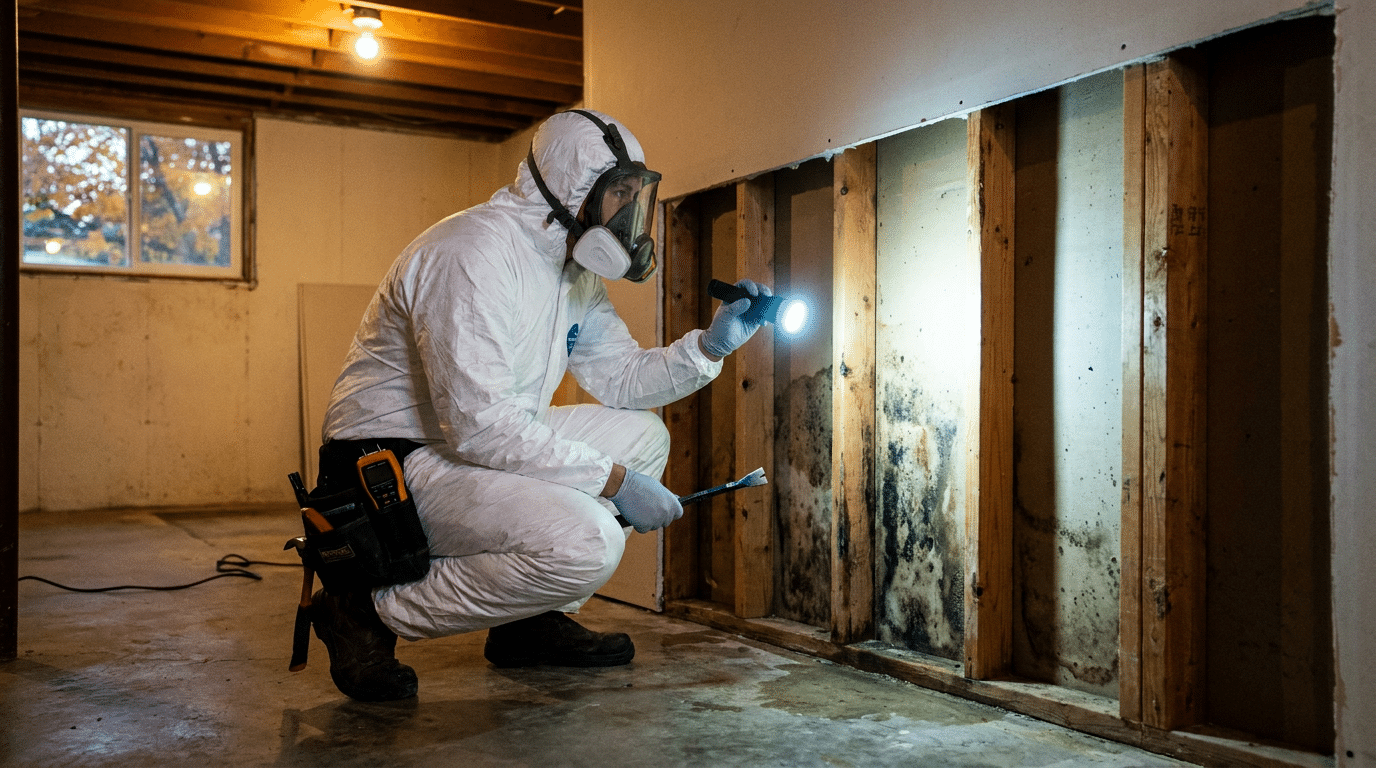
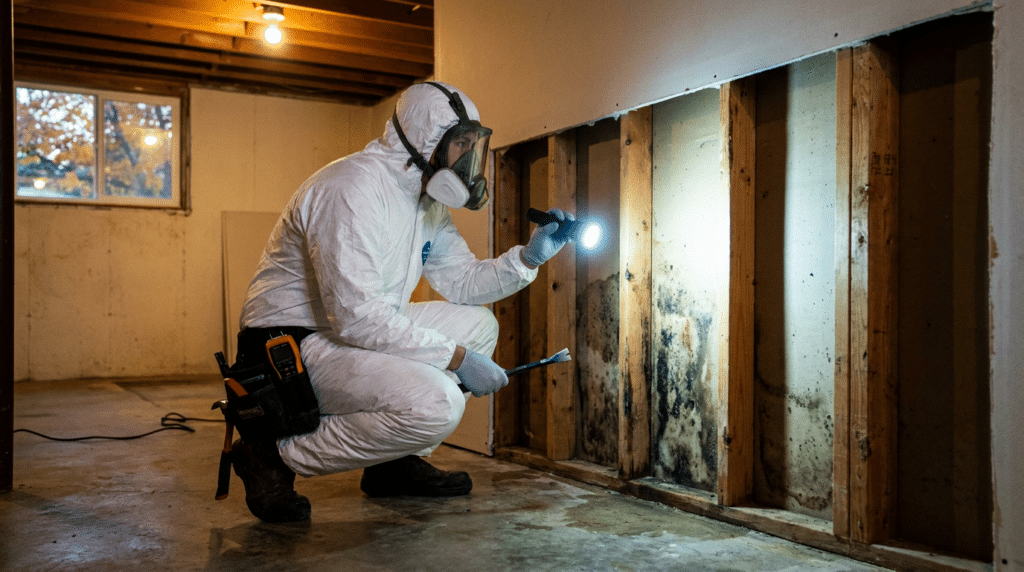
Can you remove mold yourself, or do you need professional help? Small patches of mold on hard, nonporous surfaces may be manageable with proper cleaning. However, recurring mold, hidden moisture, or contamination affecting drywall, insulation, and flooring often requires professional mold remediation.
Effective mold removal involves more than cleaning visible stains. You must also identify and correct the moisture source to help prevent mold from returning.
At The Flood Company, we help Utah homeowners and businesses address mold problems caused by water damage, plumbing leaks, basement flooding, and excess moisture. With over 20 years of restoration experience, our team provides professional assessments, mold remediation, and 24/7 emergency restoration services.
This guide answers common questions about mold removal, inspection, remediation costs, health concerns, and prevention so you can make informed decisions about protecting your property.
What Is Mold and Why Is Professional Mold Removal Necessary?
Mold is a type of fungus that grows in damp environments. It reproduces through microscopic spores that naturally exist indoors and outdoors. When these spores settle on moist materials, mold can begin growing and spreading.
Professional mold removal may be necessary when contamination affects porous building materials, spreads across multiple areas, or repeatedly returns after cleaning. Removing visible mold without correcting the underlying moisture problem can allow growth to return.
Understanding Mold Growth and Its Dangers
Mold requires moisture and a suitable surface to grow. Common sources of indoor moisture include leaking pipes, roof leaks, condensation, appliance failures, and basement flooding.
Materials that can support mold growth include:
- Drywall and wallpaper
- Wood framing and subflooring
- Carpet and carpet padding
- Insulation
- Ceiling tiles
- Cardboard and stored belongings
Even in Utah‘s relatively dry climate, mold can develop inside damp walls, beneath flooring, and in poorly ventilated areas.
According to the Environmental Protection Agency (EPA), mold exposure can cause allergic reactions, respiratory irritation, and asthma symptoms in sensitive individuals. However, mold color alone does not determine its potential health effects.
Addressing moisture problems promptly helps limit additional damage and reduces the conditions that allow mold to grow.
When Should You Call for Professional Mold Remediation?
Consider professional mold remediation when:
- Mold repeatedly returns after cleaning.
- You notice persistent musty odors.
- Mold appears on drywall, insulation, or other porous materials.
- Water damage has affected walls, ceilings, or flooring.
- You suspect mold growth behind cabinets or inside wall cavities.
- Contamination involves sewage or other potentially hazardous water.
- Mold affects multiple rooms or a large area.
The EPA generally recommends professional assistance when mold covers more than approximately 10 square feet, although smaller areas may also require specialized attention depending on the circumstances.
| Approach | Suitable Situation | Main Limitation |
|---|---|---|
| DIY cleaning | Small, isolated growth on washable, hard surfaces | May not address concealed moisture |
| Professional inspection | Recurring odors, staining, or suspected hidden damage | Additional access may be needed |
| Professional remediation | Extensive growth or contaminated porous materials | Scope depends on the extent of damage |
If you’re unsure how serious the problem is, a professional assessment can help determine the appropriate next steps.
How Does The Flood Company Approach Mold Inspection?
A professional mold inspection helps identify visible contamination, moisture problems, and areas where hidden damage may exist.
At The Flood Company, we focus on understanding the source of moisture, evaluating affected materials, and determining what further investigation or remediation may be necessary.
Our Mold Inspection Process
A thorough mold assessment may include the following steps.
1. Reviewing the Property’s Water Damage History
We begin by discussing previous leaks, flooding, recurring odors, and visible signs of moisture damage.
Understanding when the problem started helps identify potential moisture sources.
2. Examining Affected Areas
The assessment considers visible mold growth, water stains, damaged materials, and areas where moisture may be trapped.
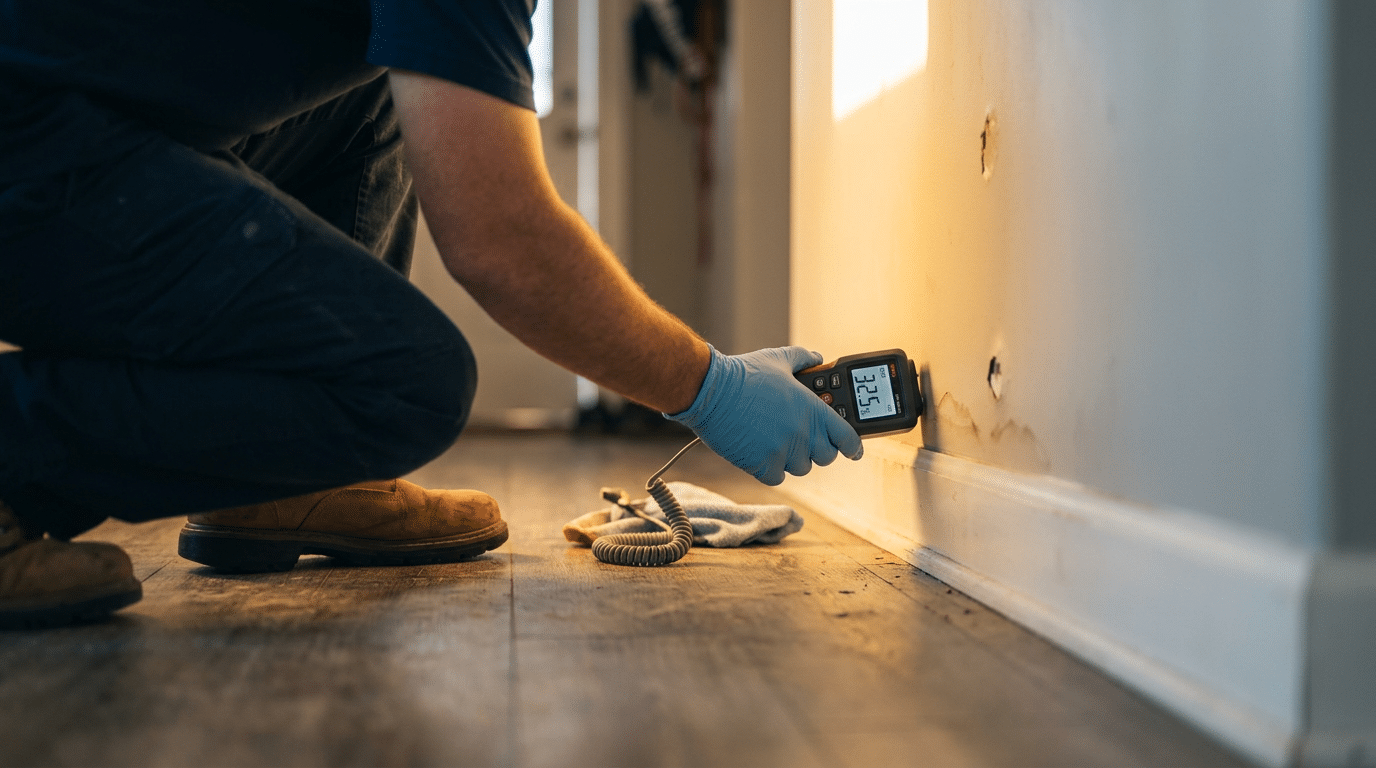
3. Checking Moisture Conditions
Moisture meters and other appropriate inspection tools can help identify elevated moisture levels in building materials.
These tools detect moisture conditions rather than mold itself.
4. Evaluating Possible Hidden Damage
If mold is suspected behind walls, beneath flooring, or inside cabinets, further investigation may be recommended.
5. Recommending Next Steps
Based on the findings, we can discuss the appropriate inspection, cleanup, drying, and restoration considerations.
Is Mold Testing Always Necessary?
No. Mold testing is not necessary in every situation.
According to the EPA, when mold growth is already visible, sampling is generally unnecessary simply to confirm its presence.
Testing may be useful when it addresses a specific concern, such as an unclear contamination condition or an agreed post-remediation evaluation.
A professional assessment should help determine whether testing would provide information that changes the remediation plan.
Damage Assessment for Mold Problems
Mold damage assessment involves more than measuring the visible affected area.
It also considers:
- The extent of moisture damage
- Affected building materials
- Possible concealed contamination
- Adjacent rooms and belongings
- Accessibility of damaged areas
- Cleanup and restoration requirements
A damp wall cavity, for example, may require a different approach from mold on an exposed, washable surface.
Identifying these differences helps establish an appropriate remediation scope.
What Does the Mold Remediation Process Involve?
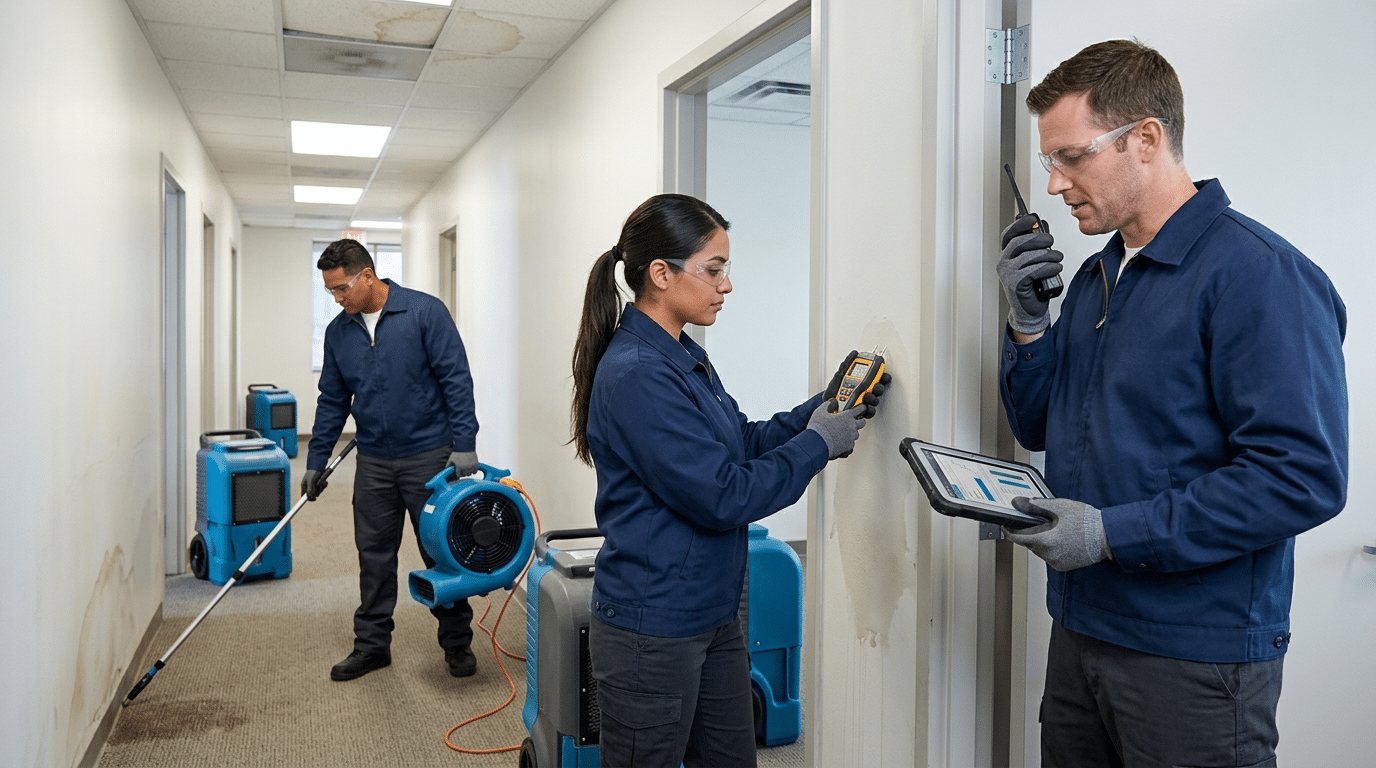
Professional mold remediation is a structured process designed to remove contamination, limit its spread, and correct the moisture conditions that contributed to mold growth.
The exact steps depend on the affected materials, contamination extent, and property conditions.
Step 1: Containment and Air Filtration
Containment helps separate affected work areas from unaffected portions of the property.
Depending on the project, remediation professionals may use physical barriers, controlled access, and HEPA-filtered air filtration equipment.
HEPA stands for high-efficiency particulate air. HEPA filtration equipment can capture airborne particles during remediation.
Proper containment is especially important when removing contaminated drywall, insulation, or other materials that may release dust and mold particles.
Step 2: Removing Mold-Contaminated Materials
Some porous materials cannot be adequately cleaned when mold growth extends into their structure.
Depending on their condition, affected materials may require removal.
Examples include:
- Severely contaminated drywall
- Mold-damaged insulation
- Affected carpet padding
- Certain ceiling tiles
- Unsalvageable porous contents
Not every affected material requires replacement. Structural wood and other surfaces should be evaluated to determine whether appropriate cleaning is possible.
Step 3: Cleaning Affected Surfaces
After removing materials that cannot be salvaged, remaining surfaces are cleaned using methods appropriate for the material and contamination.
Professional cleaning may include HEPA vacuuming, physical removal of contamination, and suitable surface-cleaning techniques.
Simply covering mold with paint or applying a chemical treatment without removing contamination is not an adequate substitute for remediation.
The IICRC S520 standard provides recognized guidance for professional mold remediation practices.
Step 4: Moisture Control and Drying
Correcting the moisture source is essential to successful remediation.
Depending on the situation, this may involve repairing plumbing leaks, addressing drainage problems, or drying affected building materials.
A wall should not be closed or rebuilt while materials remain excessively damp.
Step 5: Restoration and Repairs
Once remediation and required completion checks are complete, you can restore damaged areas.
Restoration work may involve:
- Replacing drywall
- Installing insulation
- Repairing flooring
- Repainting affected surfaces
- Restoring damaged interior finishes
The required repairs depend on the extent of damage and the agreed project scope.
Can Mold Be Completely Removed From a Home?
No home can reasonably be made permanently free of every mold spore.
Mold spores naturally occur indoors and outdoors. Professional mold remediation aims to remove unwanted indoor mold growth and contaminated materials while correcting the conditions that allowed it to develop.
What Does Successful Mold Remediation Look Like?
Successful remediation focuses on restoring acceptable building conditions rather than promising complete elimination of all spores.
Depending on the project, completion criteria may include:
- Correcting the moisture source
- Removing visible mold growth
- Cleaning affected work areas
- Achieving appropriate moisture conditions
- Removing contaminated materials where necessary
- Completing agreed inspections or verification procedures
Some projects may also require independent post-remediation evaluation.
Completion criteria should be established before work begins whenever practical.
How Can You Prevent Mold From Returning?
Moisture control is the most effective way to reduce the likelihood of recurring mold problems.
Homeowners can take several preventive steps:
- Repair plumbing and roof leaks promptly.
- Use bathroom and kitchen exhaust fans that vent outdoors.
- Address basement seepage and drainage problems.
- Inspect appliances and water supply connections.
- Control indoor humidity and condensation.
- Keep stored belongings away from damp foundation walls.
- Dry water-damaged materials as quickly as possible.
The EPA recommends maintaining indoor relative humidity below 60%, ideally between 30% and 50% when practical.
Pro Tip: After a leak or remediation project, keep photographs and repair records. They can help identify recurring moisture problems and provide useful documentation for future inspections.
What Factors Influence the Cost of Mold Removal?
Mold removal costs vary depending on the extent of contamination, affected materials, accessibility, and restoration requirements.
A small area of surface growth may require limited cleaning, while contamination inside walls or beneath flooring can involve removal, containment, drying, and reconstruction.
Size and Severity of Mold Damage
Larger or more complex remediation projects generally require additional labor, equipment, and materials.
However, visible mold size does not always reflect the full extent of contamination.
Hidden moisture behind cabinets or inside wall cavities can increase the scope of work.
Accessibility of Affected Areas
Mold behind finished walls, beneath flooring, or inside confined spaces may require additional access and protection measures.
These conditions can influence labor requirements and project costs.
Materials Requiring Removal
Porous materials such as insulation, drywall, and carpet padding may need replacement when contamination cannot be adequately removed.
The type and quantity of affected materials influence remediation and reconstruction costs.
Containment and Equipment Requirements
Depending on the project, costs may include containment materials, HEPA filtration, specialized cleaning equipment, disposal, and drying equipment.
Additional Repairs and Restoration
Mold remediation and property repairs are related but distinct services.
An estimate should clearly explain whether it includes:
- Mold remediation
- Moisture investigation
- Material removal and disposal
- Structural drying
- Plumbing or leak repairs
- Post-remediation evaluation
- Reconstruction and finishing
Requesting a written scope helps you understand what is included and identify potential additional costs.
Does Homeowners Insurance Cover Mold Removal?
Homeowners insurance may cover mold-related damage in certain circumstances, particularly when the damage results from a covered water loss.
However, coverage varies by policy, cause of damage, exclusions, and applicable limits.
Mold caused by long-term moisture problems, neglected maintenance, or flooding may be excluded or subject to restrictions.
The Flood Company offers assistance with restoration documentation and direct insurance billing. We can help you understand the restoration scope, but your insurer determines coverage under your policy.
Financing options may also be available for qualifying projects.
How Does Water Damage Lead to Mold Growth?
Water damage creates conditions for mold growth when moisture remains in building materials.
A leaking pipe, overflowing appliance, roof leak, or flooded basement can introduce moisture into areas that are difficult to inspect visually.
Under suitable conditions, mold growth can begin within 24 to 48 hours after materials become wet.
That is why prompt water removal and drying matter after a water damage incident.
The Connection Between Hidden Moisture and Mold
Water doesn’t always stay where the original leak occurred.
For example, a dishwasher leak can spread beneath cabinets, soak flooring materials, and enter adjacent wall cavities.
Although you may clean up the visible water, moisture can remain trapped beneath the surface.
Common signs of concealed moisture include:
- Persistent musty odors
- Discoloration on walls or ceilings
- Warped flooring
- Peeling paint or wallpaper
- Swollen baseboards
- Recurring dampness
A professional moisture assessment can help determine whether additional drying or investigation is needed.
How Does Water Damage Restoration Help Prevent Mold?
Water damage restoration addresses excess moisture before it causes further deterioration.
Depending on the damage, the process may involve water extraction, removal of unsalvageable materials, structural drying, and moisture monitoring.
If mold growth is already present, additional remediation procedures may be necessary.
The Flood Company provides 24/7 emergency water damage restoration services throughout Northern Utah.
We also offer free consultations and initial inspections for water damage evaluation. If mold-specific investigation or testing is needed, ask about any applicable charges before authorizing additional services.
Does The Flood Company Offer Commercial Mold Remediation?
Yes. The Flood Company provides commercial mold remediation services for businesses, property managers, and commercial property owners.
Commercial mold problems require careful planning because affected spaces may include occupied offices, retail areas, shared ventilation systems, storage facilities, and tenant spaces.
Mold Remediation for Commercial Properties
Commercial remediation planning considers both contamination control and property operations.
Important factors include:
- The extent and location of contamination
- Occupant and employee safety
- Access to affected areas
- Shared ventilation systems
- Equipment placement
- Tenant communication
- Business continuity
- Insurance documentation
Not every affected area can remain occupied during remediation. Access restrictions depend on the work scope and site conditions.
Coordinating Commercial Restoration
Commercial mold remediation may also involve water damage restoration and reconstruction.
Coordinating these services can help property owners understand the sequence of work and reduce unnecessary disruptions.
The Flood Company works with property owners, managers, and insurance representatives to support the restoration process.
Contact our team to discuss commercial mold concerns and the appropriate next steps for your property.
Frequently Asked Questions About Mold Removal
The Bottom Line
Mold removal is most effective when it addresses both contamination and the moisture conditions that caused it.
Remember these key points:
- Small amounts of surface mold may be manageable with appropriate cleaning.
- Recurring or extensive mold growth may require professional remediation.
- Hidden moisture can cause damage even when surfaces appear dry.
- Mold testing isn’t necessary in every situation.
- Effective remediation involves cleaning, assessing materials, and controlling moisture.
- Prompt action after water damage can help reduce the risk of mold growth.
If you’re dealing with recurring mold, musty odors, or water-damaged materials, a professional assessment can clarify the problem’s extent and the right next steps.
Still Have Questions About Mold Removal?
Mold problems can be stressful, especially when hidden moisture or previous water damage is involved. The Flood Company is here to help you understand your options.
Our experienced restoration team can assess affected areas, identify moisture concerns, and recommend appropriate mold remediation solutions to help protect your property.
With over 20 years of restoration experience, we provide 24/7 emergency restoration services for homes and businesses throughout Utah and Southwest Wyoming, including Davis, Salt Lake, Summit, Utah, and Weber counties.
Don’t let mold damage get worse. Call The Flood Company at (801) 294-7452 to discuss your concerns and schedule an inspection.
Related Reads

- Mold Removal FAQ: Common Questions Answered - October 13, 2026
- How to Choose the Right 24/7 Emergency Restoration Service: Complete Guide - October 9, 2026
- How to Choose the Right Commercial Water Damage Restoration Company: Complete Guide - October 6, 2026